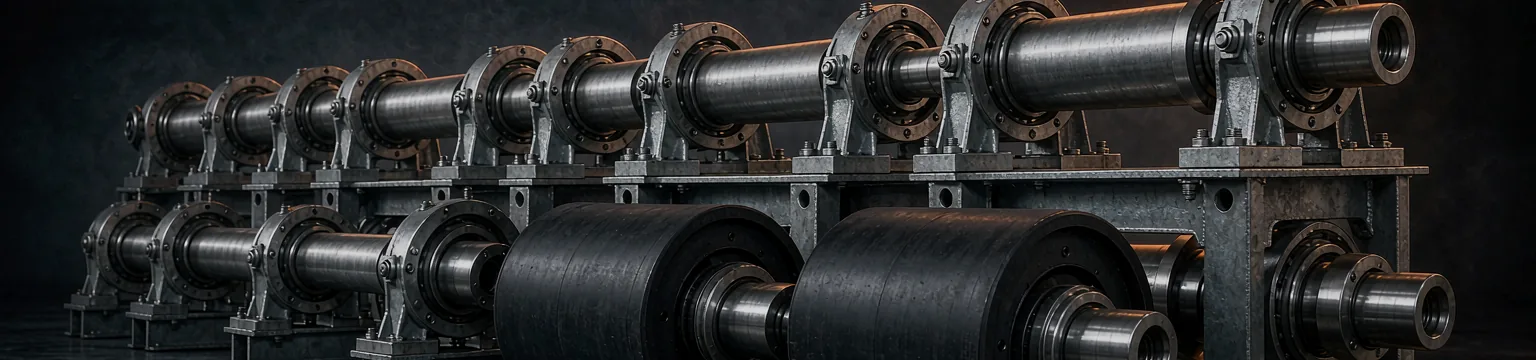
Conveyor Stringers The Structure That Sets the Belt Line
Conveyor stringers in channel section 100-280 mm for belt widths 500-2000 mm. Q235B steel, painted or galvanized, to your structure drawing.
A stringer is the longitudinal member the idler frames bolt onto. It carries the frames, sets the belt line and, more than any other component, determines whether the conveyor tracks. If the stringer is not straight and level, no amount of idler quality will save the belt.
Stringers are specified by channel size against belt width, and by steel grade against the structure standard the project uses. Both matter: the channel sets stiffness, and the grade sets whether the drawing will be accepted.
What You Are Actually Getting
| Parameter | Specification |
|---|---|
| Section | Channel, 100 mm to 280 mm depending on belt width |
| Steel | Q235B to GB/T 700 - 235 MPa min yield, 27 J impact at +20 C |
| Equivalents | S235JR (EN 10025-2), SS400 (JIS G 3101), A36 (ASTM A36/A36M - 250 MPa, no default impact requirement) |
| Level tolerance | Within 2 mm over the station |
| Squareness | Frame square to the belt centre line within 1 mm per 1 m of belt width |
| Finish | Painted or hot-dip galvanized |
| Length | Cut to your structure drawing; not restricted to a standard length |
| Fixings | Bolted frame connections - tell us the bolt pattern if you are matching an existing structure |
Stringer Channel by Belt Width
The channel size follows the belt width and the span between supports. The table gives the standard pairing; a long span at the same belt width needs the next size up.
| Belt width | Typical stringer | Roller lengths it carries |
|---|---|---|
| 500 mm | Channel 10# / 100 mm | Carrying 190 / 200 mm, return 600 mm |
| 650 mm | Channel 12# / 120 mm | Carrying 250 mm, return 750 mm |
| 800 mm | Channel 14# / 140 mm | Carrying 315 mm, return 950 mm |
| 1000 mm | Channel 16# / 160 mm | Carrying 380 mm, return 1150 mm |
| 1200 mm | Channel 18# / 180 mm | Carrying 465 mm, return 1400 mm |
| 1400 mm | Channel 20# / 200 mm | Carrying 530 mm, return 1600 mm |
| 1600 mm | Channel 22# / 220 mm | Carrying 600 mm, return 1800 mm |
| 1800 mm | Channel 25# / 250 mm | Carrying 670 mm, return 2000 mm |
| 2000 mm | Channel 28# / 280 mm | Carrying 750 mm, return 2200 mm |
Standard pairing for a normal support span. Longer spans, heavier material or impact duty move the channel up a size - send the span and the load and we will confirm.
Why the Steel Grade Gets Rejected at Inspection
Q235B versus S235JR versus SS400
All three are 235 MPa minimum yield and all three specify 27 J impact at +20 C (Q235B and S235JR explicitly; SS400 does not by default). They are accepted as equivalent on most projects, but the drawing usually names one, so the certificate has to name the same one.
A36 is not identical
ASTM A36 is 250 MPa with no default impact requirement. It is often substituted for Q235B, but on a project that specifies impact toughness, an A36 substitution needs to be agreed rather than assumed.
Level, not straightness
The tolerance that matters is level across the station within 2 mm. A stringer can be perfectly straight and still be twisted, and a twist is what makes one roller of a set carry more than the others.
Galvanizing and drainage
A hot-dip galvanized stringer holds water in its corners if the drainage is wrong. On outdoor conveyors, specify drainage or accept that the inside will rust from the first rain.
Bolted or welded
Bolted frame connections make later alignment adjustment possible. Welded connections are stiffer but cannot be adjusted, which is a problem on a structure that may settle.
Where the Stringer Decision Shows Up
- Replacing a conveyor structure — Match the channel to the belt width and the span, and keep the bolt pattern consistent with the frames you are reusing.
- New projects with a named standard — The drawing names Q235B, S235JR, SS400 or A36. Supply the certificate for the one named, not for an equivalent.
- Outdoor and port installations — Hot-dip galvanized, with drainage designed in rather than added later.
Conveyor Stringers FAQ
Stringer or frame - which do I need?
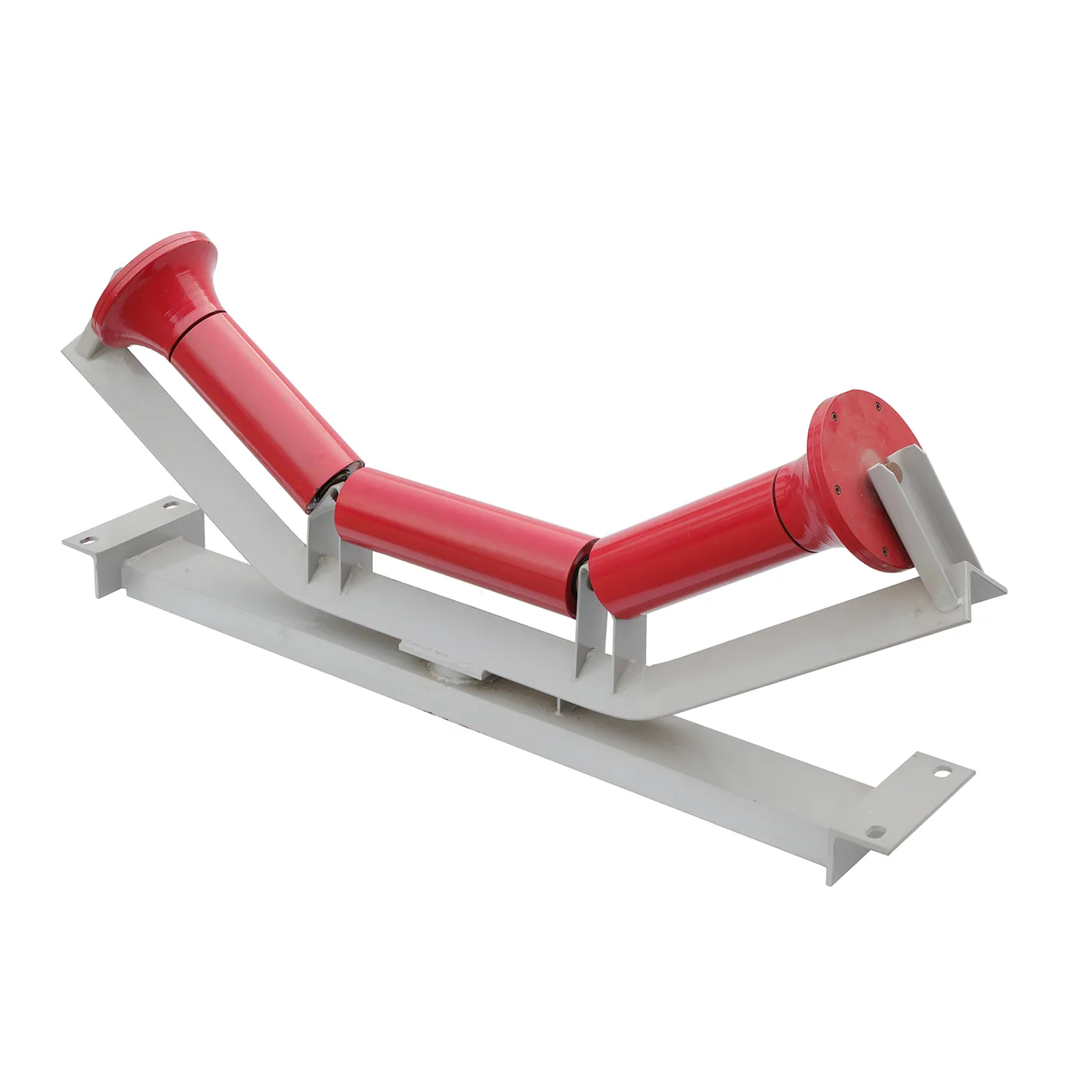
The stringer is the longitudinal member; the frame is the bracket that holds the rollers and bolts onto the stringer. Replacing rollers usually needs neither. Replacing a conveyor structure needs both, specified together.
Can you cut stringers to length?
Yes, to your drawing. There is no standard length constraint - what matters is the bolt pattern for the frames and the support positions.
What is the difference between Q235B and SS400?
Both are 235/245 MPa class structural steels. Q235B specifies 27 J impact at +20 C; SS400 does not specify impact by default. On a project that requires impact toughness, that difference matters at inspection.
Is A36 an acceptable substitute?
Usually agreed case by case. A36 is rated 250 MPa, higher than Q235B, but has no default impact requirement. On a project that specifies impact toughness, get the substitution agreed before fabrication.
How Orders Run
T/T — 40% deposit with order, 60% balance before shipment. L/C at sight accepted for container orders.
Quoted per order. The schedule depends on the drawing, the quantity and the material — we state a firm date with the quotation instead of a catalogue figure.
15 months from B/L date against manufacturing defects. Claims supported by photos and batch number.
Packing, minimum order and Incoterms are set out in full on the quotation page.
Conveyor Stringers Built to Your Drawing
Send the belt width, the duty and, if you have one, the drawing. We will specify it, quote within 24 hours, and ship samples in 2–3 days.
Talk to Our Engineers