Why Your Conveyor Belt Runs Off Centre: 9 Causes, in the Order to Check Them
A belt does not wander; it is steered. Find the cause in the right order — build-up, loading point, structure, pulleys, idlers, camber, splice, tension — before touching an idler.
Key Takeaways
- A belt does not "wander" — it is being steered. Something in the structure, the loading point or the belt itself is applying a sideways force.
- Work from the cheapest cause to the most expensive. Material build-up on a pulley costs nothing to fix; a cambered belt costs a replacement.
- Never train a belt with the tail pulley until the frame and the pulleys are proven square. That hides a fault rather than fixing it.
- On a reversing belt the usual training rules work backwards — most "fixes" make it worse in reverse.
- Measure with a piano wire, not by eye. A 5 mm error over 30 m is invisible but enough to push a belt off centre.
Why a Tracking Problem Gets "Fixed" Three Times and Comes Back
Belt tracking is the most common call-out on any bulk handling plant, and it is almost always attacked in the wrong order. The maintenance team sees the belt touching the left stringer, so they move the left return idler forward. The belt moves right. Two weeks later it is against the right stringer and they move that idler too. Nothing has been solved, because the belt was never the problem.
A conveyor belt centres itself when the forces across its width are balanced. Anything that makes the belt slightly shorter on one edge, or that applies a sideways component at a roller, breaks that balance. The job is to find which one — in an order that does not waste a shutdown.
The Nine Causes, Ranked by How Often We See Them
These are the causes we find on site visits, roughly in order of frequency. The list is not a menu: work down it and stop when the belt runs true.
| # | Cause | Tell-tale sign | Cost to fix |
|---|---|---|---|
| 1 | Material build-up on a pulley or idler | Belt shifts progressively over days, worse in wet weather | Hours of cleaning |
| 2 | Off-centre or angled loading | Belt drifts just after the loading point, then recovers further along | Chute or skirt adjustment |
| 3 | Structure or stringer not square to the belt line | Belt runs against one stringer along the whole length | Re-shim and re-align |
| 4 | Pulley not square to the centre line | Belt walks across the pulley face, edge wear at the head | Re-align, about half a day |
| 5 | Idler frames set at an angle | Localised drift where the belt passes one specific station | Loosen, square, retighten |
| 6 | Seized or stiff roller | Belt climbs to one side at one station; the roller is hot or not turning | Replace one roller |
| 7 | Belt camber — one edge longer than the other | Drift persists after everything else is proven square; direction reverses when the belt is run backwards | Belt replacement or edge trim |
| 8 | Splice not square | Belt kicks sideways once per revolution | Re-splice |
| 9 | Insufficient tension | Belt sags, slips on the drive, wanders at the tail | Take-up adjustment |
Cause 1 — Build-Up on Pulleys and Idlers
This is the most common cause and the cheapest to fix, which is exactly why it is worth checking first. Material sticks to the return side of the belt, travels around the tail pulley and builds up unevenly. A 10 mm ridge of clay across half the pulley face is effectively a taper — and a taper steers.
The tell-tale is timing: the belt shifts over days rather than instantly, and it is worse after rain or after the material moisture changes. Clean the pulleys properly — scrape, not brush — and watch whether tracking recovers. If it does, the real problem is carry-back and the fix is a belt cleaner, not an idler adjustment. See belt cleaners and impact beds.
Cause 2 — Off-Centre or Angled Loading
A belt loaded to the left of centre moves right, because the material's momentum pushes across the belt. Where the chute was designed for a different material, or where a wear liner has been replaced with a thicker one, the load can land 100 mm off centre without anyone noticing.
Watch the belt at the loading point first empty, then loaded. If it runs true when empty and drifts the moment material arrives, the chute is the problem. Skirt boards set too tight on one side give the same symptom.
Cause 3 — Structure Out of Square
If the belt leans on the same stringer along the whole length, the conveyor is not straight. That is normal after foundation settlement, after a structure has been bolted up without final alignment, or on a conveyor that has been extended.
The measurement is simple and it is not visual. Run a piano wire or a laser along the belt centre line and measure from the wire to the stringer every 5 m. Anything beyond 5 mm is worth correcting. On a new installation the usual target is 1 mm of squareness error per metre of belt width.
Cause 4 — Pulley Misalignment
Head and tail pulleys must be square to the centre line, not to the structure. A pulley that is square to a structure that is itself skewed steers the belt just as effectively as a pulley that is visibly crooked.
Check with a wire down each side of the belt: the distance from wire to pulley face should be equal across the whole face. If one side is 8 mm further out, the pulley has to come back.
Cause 5 and 6 — Idler Frames and Seized Rollers
A single idler frame set at an angle acts as a steering roller at that point: the belt drifts as it passes and comes back afterwards. Find it by walking the running conveyor and watching where the belt moves, not where it ends up.
A seized roller is easier to find. Stop the belt and spin every roller by hand. One that will not turn, or turns with a grumble, is dragging the belt sideways and wearing its cover at the same time. On a long conveyor this is worth doing quarterly — it is the cheapest preventive maintenance available.
Cause 7 — Belt Camber
A cambered belt has one edge genuinely longer than the other. It is a manufacturing defect, it cannot be adjusted out, and it is the most expensive cause on the list.
The test is conclusive. If the belt still drifts after every structure, pulley and idler alignment has been proven, run the conveyor in reverse. A cambered belt drifts to the other side when reversed; a misalignment does not. A belt that drifts the same way in both directions is being steered by the structure.
When the Belt Is Short, Steep or Reversing
| Conveyor type | What changes |
|---|---|
| Short conveyors, under 10 m | Very sensitive to small errors. A 3 mm pulley error that is irrelevant on a 200 m conveyor will throw a 5 m belt off. Alignment has to be near-perfect. |
| Reversing conveyors | Training idlers must self-align in both directions, and the usual "lead the belt" adjustment does not apply. Check tracking in both directions before signing off. |
| Steep inclines | Material rolls back and loads the belt unevenly. Chevron belts track differently and cannot be trained with a standard troughing idler. |
| Very high belt speed | Air can lift the belt edges on an exposed run, which reads as a tracking fault. Check whether the problem only appears above a certain speed, or in windy weather. |
| Sidewall or cleated belts | Sidewalls must run clear of the idlers. Tracking faults here are usually a clearance problem, not an alignment one. |
Self-Aligning Idlers: When They Help and When They Hide a Fault
A self-aligning, or training, idler pivots to steer the belt back to centre. It is a legitimate component — on long conveyors, on the return strand, and where the loading point genuinely cannot be corrected.
It is not a fix for a conveyor that is out of square. Fitted to mask an alignment fault, a training idler moves the problem downstream, adds a wear point and makes the next diagnosis harder. Our rule: fit one where the belt meets a variable sideways force, not where the structure is wrong.
FAQ
How often should I check belt tracking?
Walk the conveyor monthly and after every splice, and always during the first week after a new belt is fitted — new belts stretch and settle, so tracking that was correct on day one can be off by day five. A quarterly check of roller free rotation catches seized idlers before they start steering the belt.
Can I fix tracking by over-tensioning the belt?
No, and it usually makes things worse. Extra tension loads the pulleys, bearings and carcass, shortens belt life, and amplifies the difference between two unequal edges on a cambered belt. Set the take-up to the specified figure and fix the cause instead.
My belt only drifts when it is empty. Why?
An empty belt is lighter and generates less friction against the idlers, so the same small misalignment has a larger effect. That usually points to pulley alignment or low tension rather than the loading point. Check tail pulley squareness first.
Does a crown on the pulley help tracking?
A crown helps centre a belt on some designs, but on a modern flat-face pulley fitted to an aligned conveyor it is unnecessary, and too much crown damages the belt edges. Do not add crown as a tracking fix.
The belt tracks fine forwards but not in reverse. What is wrong?
Either the training equipment is one-directional, or the belt has camber. Run it in reverse and watch whether the drift changes side. If it does, it is camber. If it does not, it is alignment, and the alignment has to be corrected for the reversing condition.
Send Us Your Duty — We Will Return a Build
Belt width, speed, material, tonnage, temperature and environment. We come back with the build, drawings and a quotation.
Related Guides
How to Measure a Conveyor Roller for Replacement — Without the Drawing
The drawing is gone and the line is down. Six measurements and one photo define a roller completely — here is how to take them and what to send with the enquiry.
Rubber, Diamond or Ceramic: Choosing Conveyor Pulley Lagging
Lagging sets the friction that decides how much tension the drive can transmit. Rubber, diamond groove or ceramic — and why the bonding method matters more than the material.
CEMA, DIN and GB/T Idler Standards Compared — What Actually Differs
A CEMA C idler and a GB/T idler are not the same claim. Life classes, dimensional tolerances and the specification lines that make supplier quotes comparable.
Where to Go Next
Troughing Idler
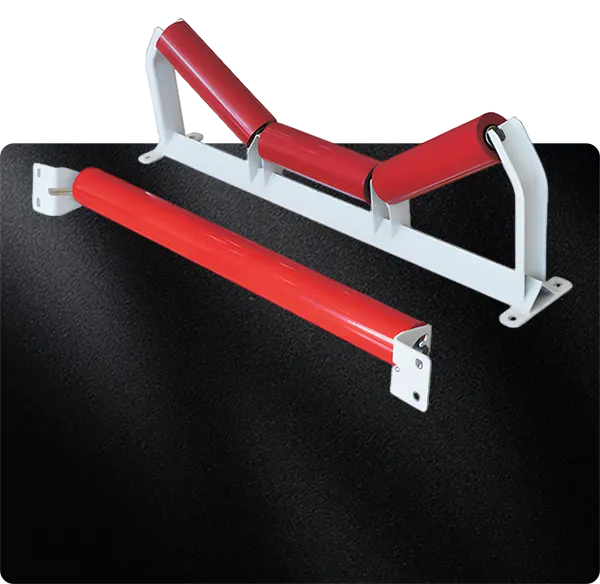
Carrying-side support, 20°/35°/45° trough angles.
Carrying / Return Idler
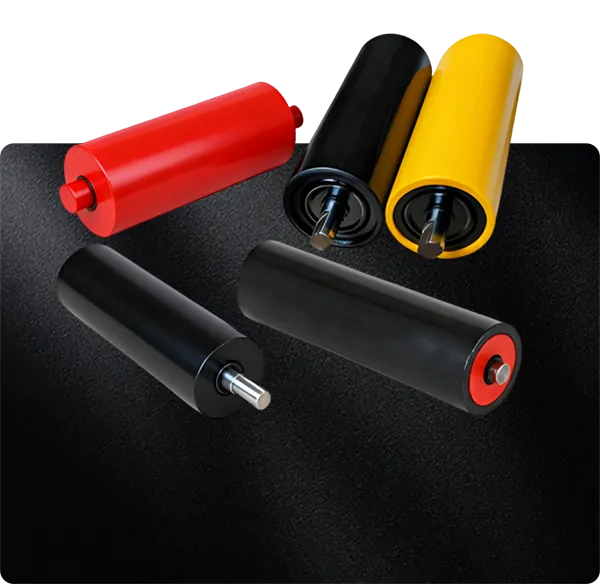
Flat carry and return duty, standard and heavy-wall tube.
Impact Roller
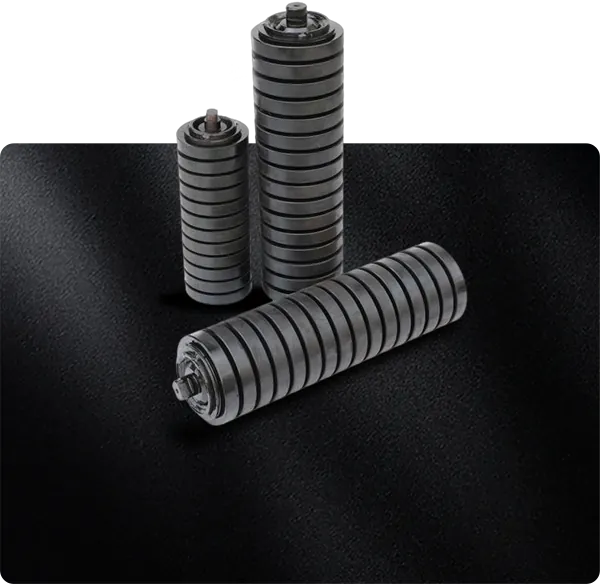
Rubber-ring cushioning at the loading point.
Conveyor Pulleys
Drive, bend, tail & snub pulleys — with rubber, ceramic or herringbone lagging to your spec.
Conveyor Belts
EP/NN, steel cord, heat, oil and abrasion resistant covers. 17 types for different duties.
Cleaners & Impact Beds
Belt cleaners, impact beds, skirt seals — the parts that decide whether your idlers survive.