Rubber, Diamond or Ceramic: Choosing Conveyor Pulley Lagging
Lagging sets the friction that decides how much tension the drive can transmit. Rubber, diamond groove or ceramic — and why the bonding method matters more than the material.
Key Takeaways
- Lagging is a drive component, not a wear part. It sets the friction coefficient that decides how much tension the drive can actually transmit.
- Rubber ≈ 0.35, diamond groove ≈ 0.40, ceramic ≈ 0.50. At a 180° wrap that is the difference between a tension ratio of 3.0 and 4.8.
- Groove pattern matters more than colour. Diamond groove sheds water; herringbone is for reversing belts; plain rubber is for dry, clean duty only.
- Bonding method, not lagging material, causes most failures. Ask for the bonding process in writing.
- Ceramic is not always the upgrade. On a thin belt cover it wears the belt faster than it helps the drive.
What Lagging Actually Does
Pulley lagging does two jobs, and buyers usually only consider the first.
It raises friction. The drive pulley transmits torque through the belt by friction. The relationship between the tight-side tension and the slack-side tension is limited by the friction coefficient and the wrap angle. Change the friction and you change how much power the same pulley can deliver — without changing the motor, the gearbox or the pulley diameter.
It protects the shell. A bare steel shell wears under the belt and under any carry-back that gets between them. Lagging is a replaceable layer over a component that is expensive to replace.
The Numbers That Decide the Choice
T1 = tight side tension, T2 = slack side tension, μ = friction coefficient, θ = wrap angle in radians
Take a 180° wrap, which is θ = π ≈ 3.14 rad. The table shows what the same pulley can transmit with each lagging type.
| Pulley surface | μ | Maximum T1/T2 at 180° wrap | Relative drive capacity |
|---|---|---|---|
| Bare steel shell | 0.25 | 2.2 | Baseline |
| Plain rubber lagging | 0.35 | 3.0 | +36 % |
| Diamond groove rubber | 0.40 | 3.5 | +59 % |
| Ceramic tile in rubber | 0.50 | 4.8 | +118 % |
Indicative values for dry conditions. Wet or muddy conditions reduce every figure — groove patterns exist precisely to recover the loss.
This is why switching from plain to diamond-groove lagging is often cheaper than fitting a larger pulley. A 36 % to 59 % gain in usable tension ratio can be the difference between one drive and two.
Lagging Types, and What Each Is Really For
| Type | Best for | Watch out for |
|---|---|---|
| Plain rubber, 10–15 mm | Dry, clean, indoor bulk handling | Loses grip fast once wet or muddy — do not fit it outdoors |
| Diamond groove rubber | Wet, dusty, outdoor conveyors. The default choice. | Grooves pack with sticky clay and need cleaning |
| Herringbone groove | Reversible belts — sheds water in both directions | Higher cost to re-lag; pattern must be correctly oriented |
| Ceramic tile in rubber | High torque, wet, slurry, steep incline, short wrap angle | Aggressive on thin belt covers; heavier; damaged tiles cannot be patched |
| Polyurethane | Food, grain, hygiene-sensitive plants | Lower temperature ceiling than rubber; less tolerant of oil |
| Bolt-on ceramic segments | Field replacement without removing the pulley | Fasteners work loose if not torqued and re-checked |
Groove Pattern: The Part Buyers Skip
A groove is not decoration and it is not only about water. On a wet or dusty pulley a smooth rubber surface develops a water film that behaves like a lubricant. The groove gives that film somewhere to go, so the rubber can contact the belt again.
- Diamond (cross) groove — the general-purpose pattern. Works in both directions, drains in both directions, and is the right default for anything outdoors.
- Herringbone (chevron) groove — water is pushed to the edges rather than trapped. Required on reversing belts, where a diamond groove would pump water toward the centre on one of the two directions.
- Parallel groove — cheaper, and fine on a dry indoor conveyor where the only contamination is fine dust.
- Plain — dry and clean only. If the conveyor is outdoors, this is the wrong choice regardless of price.
Thickness: How Much Rubber
| Pulley diameter | Typical lagging thickness | Note |
|---|---|---|
| Up to 400 mm | 8 – 10 mm | Thicker lagging stiffens the belt excessively on small pulleys |
| 400 – 800 mm | 10 – 12 mm | The most common range |
| 800 – 1250 mm | 12 – 15 mm | Higher torque and more wear allowance |
| Above 1250 mm | 15 – 20 mm | Specified with the shell thickness, not independently |
Thicker is not automatically better. Lagging adds to the effective pulley diameter, which changes the belt speed and the bend radius the carcass sees. On a small bend pulley, over-thick lagging is a belt-life problem, not an improvement.
Bonding: Where Most Failures Originate
Lagging that separates from the shell is the most common pulley failure we are asked to diagnose, and in almost every case the material was fine — the bond was not.
| Method | How it works | Durability |
|---|---|---|
| Hot vulcanised bonding | Uncured rubber sheet applied to a prepared shell and cured under heat and pressure | Best. The bond is effectively continuous with the rubber. |
| Cold bonded adhesive | Pre-cured sheet glued with a two-part adhesive | Acceptable on light duty. Very sensitive to surface preparation and cure temperature. |
| Bolt-on ceramic segments | Tiles in rubber or aluminium segments bolted to the shell | Good, and field-replaceable — but only as good as the bolt torque. |
| Wrapped / clamped | Sheet mechanically held at the ends | Temporary repair only. |
When to Re-Lag and When to Replace the Pulley
Re-lagging is the cheaper option, and appropriate when:
- The shell is still round and the wall thickness is sound.
- The shaft is not worn at the bearing journals and the keyway is intact.
- The bearing housings are not worn oval.
- The lagging failed by wear, not by the shell corroding underneath it.
Replace the pulley when the shell has worn thin, when the end-disc welds are cracked, when the shaft is worn at the journal, or when the pulley turns out to have been undersized for the duty from the start. Re-lagging an undersized pulley just postpones the same failure.
FAQ
Ceramic or rubber lagging for a wet conveyor?
Ceramic if you are short of tension ratio and the belt cover is thick enough to take the abrasion. Diamond-groove rubber if the cover is thin, or if the material is sticky enough to pack the ceramic tiles. We quote both so the price difference is visible rather than assumed.
How long does lagging last?
On a clean indoor conveyor, years. On an abrasive outdoor conveyor with poor belt cleaning, 12–24 months is realistic. Carry-back reaching the pulley is the single biggest factor — fix the belt cleaner and the lagging life roughly doubles.
Can I re-lag a pulley on site?
Bolt-on ceramic segments and cold-bonded sheet can be fitted on site. Hot vulcanised bonding needs a press and controlled heat, so it is a workshop job. For a drive pulley, the workshop job is worth the downtime.
Does lagging change the belt speed?
Slightly. Lagging adds to the effective diameter — 12 mm of lagging on a 500 mm pulley adds about 5 % to the circumference. On a fixed-speed drive that is a real change; mention it when you specify, especially on a multi-pulley drive train.
What causes lagging to come off in sheets?
Almost always a bonding failure rather than a material failure: inadequate surface preparation, curing at the wrong temperature, or a cold-bonded sheet used where hot vulcanising was required. Photos of the failed surface usually identify which.
Send Us Your Duty — We Will Return a Build
Belt width, speed, material, tonnage, temperature and environment. We come back with the build, drawings and a quotation.
Related Guides
Why Your Conveyor Belt Runs Off Centre: 9 Causes, in the Order to Check Them
A belt does not wander; it is steered. Find the cause in the right order — build-up, loading point, structure, pulleys, idlers, camber, splice, tension — before touching an idler.
How to Measure a Conveyor Roller for Replacement — Without the Drawing
The drawing is gone and the line is down. Six measurements and one photo define a roller completely — here is how to take them and what to send with the enquiry.
CEMA, DIN and GB/T Idler Standards Compared — What Actually Differs
A CEMA C idler and a GB/T idler are not the same claim. Life classes, dimensional tolerances and the specification lines that make supplier quotes comparable.
Where to Go Next
Troughing Idler
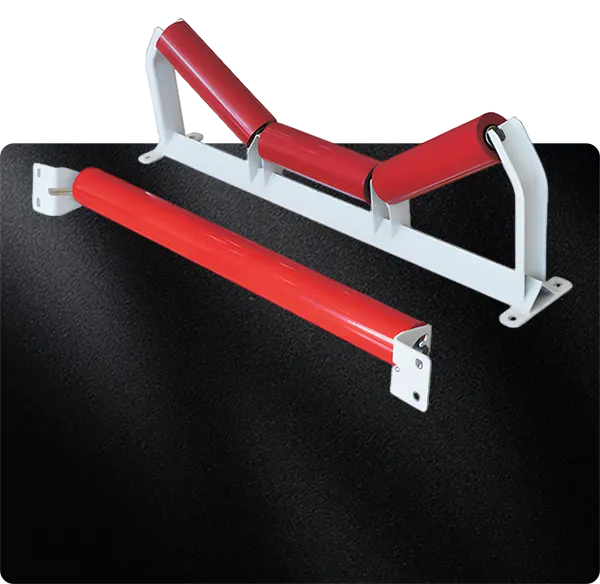
Carrying-side support, 20°/35°/45° trough angles.
Carrying / Return Idler
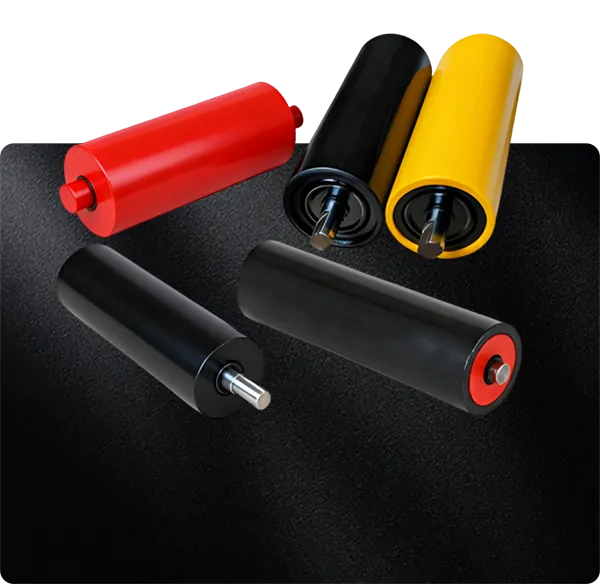
Flat carry and return duty, standard and heavy-wall tube.
Impact Roller
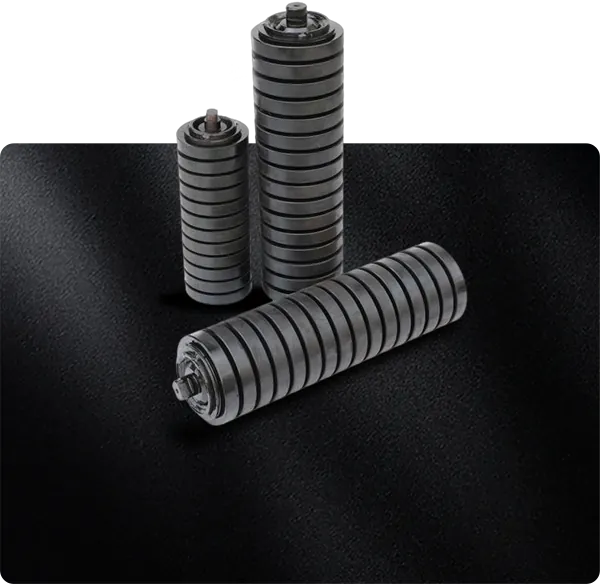
Rubber-ring cushioning at the loading point.
Conveyor Pulleys
Drive, bend, tail & snub pulleys — with rubber, ceramic or herringbone lagging to your spec.
Conveyor Belts
EP/NN, steel cord, heat, oil and abrasion resistant covers. 17 types for different duties.
Cleaners & Impact Beds
Belt cleaners, impact beds, skirt seals — the parts that decide whether your idlers survive.