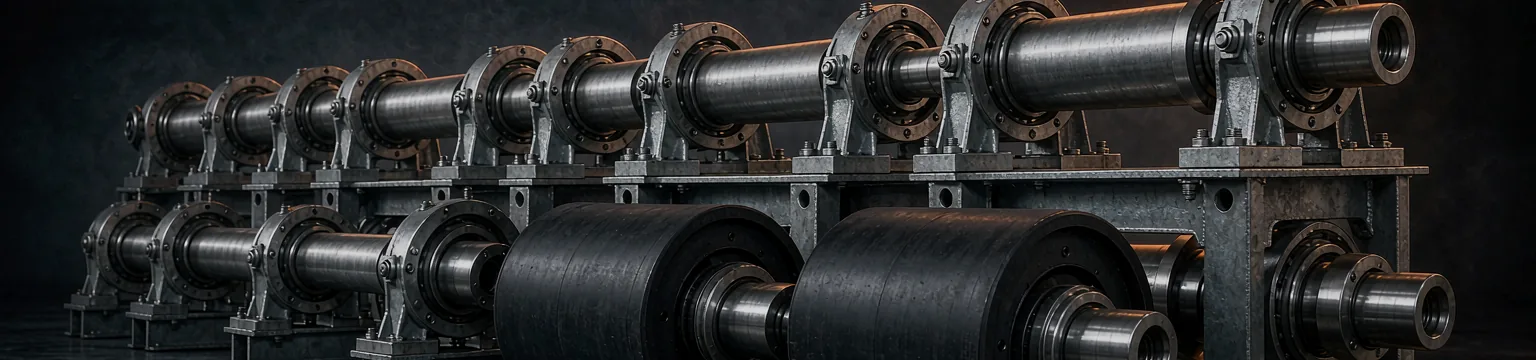
Heavy-Duty Conveyor Idlers Thicker Wall, Larger Bearings, Longer Life
Heavy-duty idlers with thicker wall tube, larger bearings and reinforced seals for high load and abrasive duty. CEMA D/E/F life class, to drawing.
A heavy-duty idler is not a different design - it is the same design built with more material where the load actually concentrates. Thicker tube, larger bearing, heavier shaft and a reinforced seal stack. The judgement is which of those four to spend on, because doing all four is often not the cheapest way to reach the life you need.
The clearest way to specify it is by life class. CEMA B and C rolls are rated 30,000 hours L10 at the 500 rpm basis; CEMA D, E and F are rated 60,000 hours. If the specification names a class, that is the target, and the build follows from it.
What You Are Actually Getting
| Parameter | Specification |
|---|---|
| Wall thickness | 5 - 7 mm heavy duty; 4 mm where a tender specifies a minimum; 3.2 - 3.7 mm light and medium |
| Bearing | Larger bearings in the range up to 6310. HRB or ZWZ standard, SKF or FAG on specification |
| Bearing clearance | C3 standard; C4 on clinker, sinter, coke and other high-temperature duty |
| Shaft | 45# steel, equivalent to DIN C45 / JIS S45C / AISI 1045, sized up where the load requires |
| Tube | Q235 steel, equivalent to SS400 / S275JR |
| Seal | Reinforced multi-stage labyrinth with retention cap - the part most often cut on a cheap idler |
| Life rating | CEMA B / C - 30,000 hours; CEMA D / E / F - 60,000 hours, both at the CEMA basis speed of 500 rpm |
| Speed | 600 rpm is the general limit; up to 750 rpm only on designs rated for it |
Matching Wall Thickness to Duty
Wall thickness is the first lever and the cheapest one, but it is not the only one. This table shows what each step buys, and where it stops helping.
| Duty | Wall | Bearing | What it buys |
|---|---|---|---|
| Light | 3.2 - 3.7 mm | 6204 - 6205 | Cheapest per unit; adequate on clean, light, short conveyors |
| Medium | 3.2 - 3.7 mm | 6205 - 6206 | The general bulk-handling build; the default unless something says otherwise |
| Tender minimum | 4 mm | 6206 - 6306 | Meets specifications that name a 4 mm minimum; otherwise unchanged |
| Heavy / abrasive | 5 - 7 mm | 6306 - 6310 | More wear allowance on the shell and more load capacity at the bearing |
| High temperature | 4 - 7 mm | 6306 - 6310, C4 | Clearance for thermal growth; grease rated to +160 C with lithium complex |
| High speed | 3.2 - 5 mm | 6306 - 6310 | Diameter up before wall up - larger diameter lowers roll rpm at the same belt speed |
A guide to the trade-offs, not a catalogue. The right combination follows the actual load, the belt speed and the environment - send those three and we will size it.
Four Levers, and Which One to Pull
Wall thickness
Buys wear allowance and some stiffness. It is the cheapest lever and the one most often specified - but on a high-speed line it also adds rotating mass, which raises the bearing load it was meant to reduce.
Bearing size
Buys rating. Stepping from a 6205 to a 6306 is usually a bigger life gain than adding a millimetre of wall, and it is often cheaper. This is the lever to pull when the failure is a seized bearing rather than a worn shell.
Shaft diameter
Buys deflection resistance. On wide belts the shaft bends under load long before the tube wears. A larger shaft also lets the bearing go up a size.
Diameter
Buys speed margin. A larger roll turns slower at the same belt speed, which is the correct fix for a high-speed line that is eating bearings - not a thicker wall.
Where Heavy Duty Is Justified
- Primary crushing and ore handling — Abrasive, heavy, continuous. Shell wear and bearing load both run high, so wall and bearing both need to go up.
- High-speed mainline conveyors — Above about 4 m/s the roll rpm becomes the limiting factor. The correct answer is usually a larger diameter, not a heavier build.
- Hot material — Clinker, sinter and coke. C4 clearance and lithium complex grease to +160 C matter more than wall thickness.
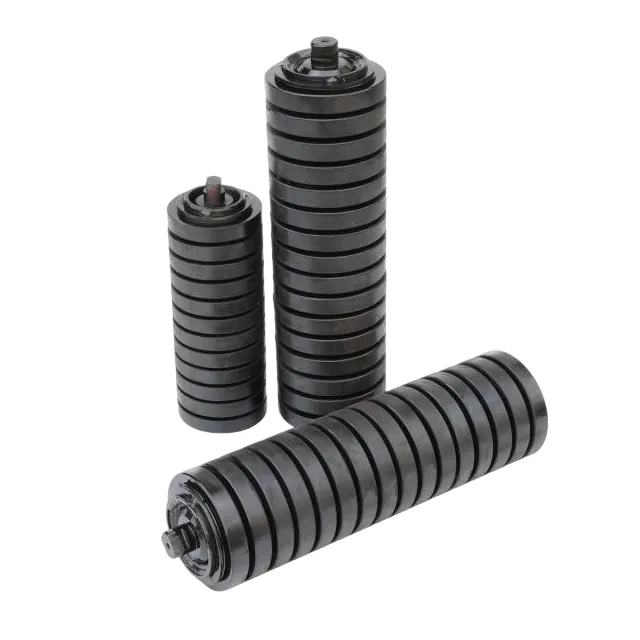
Heavy-Duty Conveyor Idlers FAQ
What makes an idler heavy duty?
Not one thing. It is the combination of wall thickness, bearing size, shaft size and seal grade, chosen against the actual load and speed. A thick wall on an undersized bearing is not a heavy-duty idler, it is a heavy idler.
Is a thicker wall always better?
No. On a high-speed line a heavier roll increases rotating mass and bearing load. Above roughly 4 m/s the correct move is usually a larger diameter, which lowers the rpm.
What wall thickness should I specify?
Follow the specification if it names one - 4 mm minimums are common in tenders. If it does not, 3.2 to 3.7 mm suits most bulk handling, and 5 to 7 mm is for abrasive or high-load duty. Tell us the duty and we will size it rather than guess.
Can you supply to a CEMA life class?
Yes. Name the class - B, C, D, E or F - and we build to the L10 life it carries at the 500 rpm basis. The whole basis is set out in our CEMA life class guide.
How Orders Run
T/T — 40% deposit with order, 60% balance before shipment. L/C at sight accepted for container orders.
Quoted per order. The schedule depends on the drawing, the quantity and the material — we state a firm date with the quotation instead of a catalogue figure.
15 months from B/L date against manufacturing defects. Claims supported by photos and batch number.
Packing, minimum order and Incoterms are set out in full on the quotation page.
Heavy-Duty Conveyor Idlers Built to Your Drawing
Send the belt width, the duty and, if you have one, the drawing. We will specify it, quote within 24 hours, and ship samples in 2–3 days.
Talk to Our Engineers